A1 Everyday English
Beginner · A1
A1 Everyday English
Daily Life & Communication — 20 lessons across 5 modules
Course Description
Welcome to A1 Everyday English: Daily Life & Communication — a beginner English course for teens and adults. This course uses simple, real-life language you can use every day. You will learn to say hello, talk about yourself, order food, describe your hobbies, and travel with confidence.
Each lesson takes 10–15 minutes. The course is interactive, colourful, and easy to follow — even if you are new to English!
What You Will Learn
- Say hello, goodbye, and introduce yourself in English
- Give personal information: name, age, country, job
- Describe your daily routine and tell the time
- Talk about food, order at a café, and go shopping
- Describe your hobbies, sports, and free time
- Use transport and ask for directions in a new city
- Use simple grammar: I am, I like, I can, There is
- Have basic conversations with confidence
Who Is This Course For?
This course is for complete beginners — people who know very little English or are starting from zero. It is perfect for:
- Teenagers (13+) starting English at school
- Adults who want to learn practical, everyday English
- People who need English for travel or daily life
- Self-study learners who want flexible, short lessons
Course Structure
5 modules · 4 lessons each · Each lesson: 10–15 minutes
Module 1 — Introductions
- Lesson 1: Hello!
- Lesson 2: Personal Information
- Lesson 3: Meeting People
- Lesson 4: Module Quiz
Module 2 — Daily Activities
- Lesson 5: My Morning
- Lesson 6: What Time Is It?
- Lesson 7: Days & Routines
- Lesson 8: Module Quiz
Module 3 — Food & Shopping
- Lesson 9: Food I Like
- Lesson 10: At the Café
- Lesson 11: Shopping
- Lesson 12: Module Quiz
Module 4 — Hobbies & Free Time
- Lesson 13: My Hobbies
- Lesson 14: Sports
- Lesson 15: Films & Music
- Lesson 16: Module Quiz
Module 5 — Travel & Places
- Lesson 17: Transport
- Lesson 18: Places
- Lesson 19: Directions
- Lesson 20: Final Course Test (15 questions)

Lesson 1 — Hello!
Learn to say hello and goodbye in English.






Anna: Hello! My name is Anna. What is your name?
Ben: Hi Anna! I am Ben. Nice to meet you!
Anna: Nice to meet you too! How are you?
Ben: I am fine, thank you! And you?
Anna: I am great! Goodbye, Ben!
Ben: Goodbye, Anna! See you later!

Lesson 2 — Personal Information
Learn to give your name, age, and where you are from.





My name is Carlos. I am 24 years old. I am from Spain. I live in Madrid.
I am a student. I study English at school. I like music and football.
My phone number is 555-1234. My email is carlos@email.com.
Nice to meet you! I am happy to learn English.

Lesson 3 — Meeting People
Talk to new people. Ask questions and introduce friends.




Hi, my name is Sofia. This is my friend, Jake. Jake is from Canada.
Jake is a teacher. He works in a school. He is 30 years old.
Jake and I are friends from university. We study English together.
Jake is very friendly. He likes football and coffee. Say hello to Jake!
Module 1 Quiz
Introductions — Test what you know! 6 questions.
Lesson 5 — My Morning
Describe what you do every morning.






My name is Marco. Every day I wake up at 7 o'clock. First, I have a shower. Then I brush my teeth.
After that, I eat breakfast. I eat eggs and drink coffee. Breakfast is my favourite meal!
Then I get dressed and go to work. I start work at 9 o'clock. I take the bus to get there.

Lesson 6 — What Time Is It?
Learn to tell the time in English.
Vocabulary
- o'clock, half past, quarter to, quarter past
- morning / afternoon / evening / night
- What time is it? / It is… / At… o'clock
Grammar — Telling Time
- It is 3 o'clock. / It is half past 4.
- Preposition "at" with time: at 7am, at noon, at midnight
- The difference: in the morning / in the afternoon / at night
Key Expressions
- "What time do you wake up?" — "I wake up at 7."
- "What time does the film start?" — "It starts at 8:30."
Exercise Suggestions
- Match clock images to written times
- Fill in: "I eat lunch _____ 1 o'clock."
- Write your daily schedule with times
Speaking
- Ask a partner: "What time do you eat dinner?"
- Role play: You are late — apologise and explain what time it is!
Lesson 7 — Days & Routines
Learn the days of the week and talk about your routine.
Vocabulary — Days of the Week
- Monday, Tuesday, Wednesday, Thursday, Friday
- Saturday, Sunday — the weekend
- every day / weekday / weekend / once a week / twice a week
Grammar — Frequency Adverbs
- always (100%) / usually (80%) / sometimes (50%) / never (0%)
- I always go to the gym on Monday. She never works on Sunday.
- Position: I always eat breakfast. / I do NOT always wake early.
Exercise Suggestions
- Put the days in the correct order
- Fill in: "I _____ play football on Saturday." (always/never)
- Write 3 sentences about your weekly routine
Module 2 Quiz
Daily Activities — 6 questions.
Lesson 9 — Food I Like
Talk about food you like and don't like.
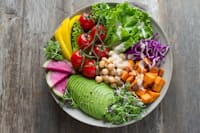

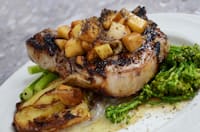

Grammar — Like + -ing / object
- I like pizza. I don't like fish. Do you like salad?
- Scale: I love / I really like / I don't mind / I hate
- Question: Do you like ___? — Yes, I do. / No, I don't.
Exercise Suggestions
- Write 5 sentences about food using like / don't like
- Survey: ask 3 classmates about their favourite food

Lesson 10 — At the Café
Order food and drink at a café.
Key Phrases
- "Can I have a coffee, please?"
- "How much is it?" — "That's £3.50, please."
- "Here you go." / "Thank you!" / "Enjoy your meal!"
Vocabulary
- menu, bill, waiter, table, order, receipt
- tea, coffee, juice, water, cake, sandwich, toast
Role Play Exercise
- Student A: customer — Student B: waiter
- Order 2 items from the menu, ask the price, and pay
- Swap roles and repeat
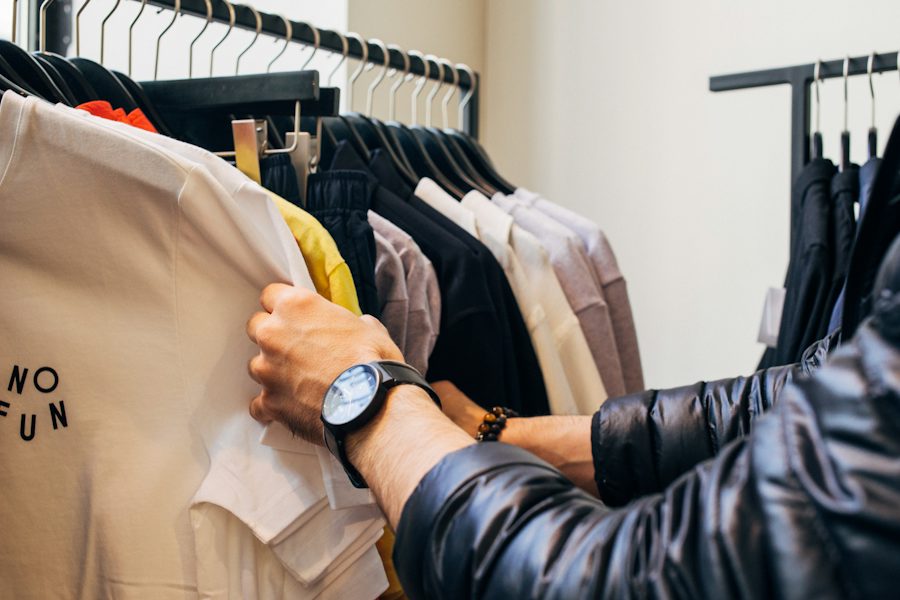
Lesson 11 — Shopping
Buy things in a shop. Ask for prices and sizes.
Vocabulary
- cheap / expensive / price / sale / discount
- small / medium / large / too big / too small
- cash / card / change / receipt / shopping bag
Grammar — How much / How many
- How much is this shirt? — It's £20.
- How many apples do you want? — Three, please.
- Rule: How much = uncountable / prices. How many = countable things.
Exercise Suggestions
- Match price tags to items
- Fill in: "How _____ is this bag?" (much/many)
- Role play: Buy 3 items from a shop
Module 3 Quiz
Food & Shopping — 6 questions.

Lesson 13 — My Hobbies
Talk about things you like to do in your free time.




Grammar — like + verb-ing
- I like reading. I love cooking. I enjoy hiking.
- Do you like swimming? — Yes, I do. / No, I don't.
- I enjoy / I don't mind / I hate + -ing
Speaking Exercise
- Write 3 hobbies you like and 2 you don't like
- Ask a partner: "Do you like ___ing?"

Lesson 14 — Sports
Talk about sports you play and watch.
Vocabulary
- football, tennis, swimming, basketball, cycling, running, yoga
- Verb + sport: play football, go swimming, do yoga
Grammar — Can for ability
- I can swim. She can't play tennis. Can you ride a bike?
- Positive: can + verb. Negative: can't + verb. Question: Can you…?
Exercise Suggestions
- Match each sport to the correct verb: play / go / do
- Write 3 sentences: "I can ___." and 2: "I can't ___."

Lesson 15 — Films & Music
Talk about films and music you like.
Vocabulary — Film Genres
- action, comedy, drama, horror, documentary, animation
Vocabulary — Music
- pop, rock, jazz, classical, hip-hop, R&B
- singer, band, director, actor, song, album
Grammar — Present Simple Questions
- Do you like action films? — Yes, I do. / No, I don't.
- What music do you listen to? — I listen to pop.
- What is your favourite film? — My favourite film is ___.
Exercise Suggestions
- Write your top 3 films and top 3 music types
- Discuss: "What is your favourite film? Why do you like it?"
Module 4 Quiz
Hobbies & Free Time — 6 questions.

Lesson 17 — Transport
Talk about how you travel. Trains, buses, planes!



Key Language
- ticket, station, airport, platform, departure, arrival
- I go by bus. She travels by train. We fly to Spain.
- How long does it take? — It takes 2 hours.
Exercise Suggestions
- Match transport words to images
- Fill in: "I go to school _____ bus." (by/on/in)
- Write how you travel to work, school, and shops

Lesson 18 — Places in a Town
Talk about places in a town and city.
Vocabulary
- hotel, restaurant, bank, hospital, school, park, museum
- supermarket, pharmacy, post office, library, café
Location Words
- near / far / next to / opposite / between / on the left / on the right
Grammar — There is / There are
- There is a bank near the hotel. There are two restaurants here.
- Is there a park? — Yes, there is. / No, there isn't.
Exercise Suggestions
- Look at a simple map and describe the places
- Write 5 sentences using "there is / there are"

Lesson 19 — Directions
Ask for and give directions in English.
Key Phrases
- "Excuse me, where is the station?"
- "Turn left / Turn right / Go straight ahead"
- "Cross the road / Take the second right / It's on the left"
- "It's about 5 minutes away. / You can't miss it!"
Grammar — Imperative (giving instructions)
- Turn left. Go straight. Take the second right. Cross the bridge.
- Imperatives start with a verb. No subject (you) needed.
Exercise Suggestions
- Follow written directions on a simple map
- Role play: ask for and give directions to the nearest café or supermarket
Final Course Test
A1 Everyday English — 15 questions — All 5 Modules
Let's Talk
About Food!
Healthy food, unhealthy food, and how to use
much, many & a lot of
Let's Talk
About Food!
Healthy food, unhealthy food, and how to use much, many & a lot of


You can count them.
→ Has a plural form (–s/–es)
→ Can use a / an before it
1 apple → 2 apples
1 carrot → 5 carrots
1 egg → 3 eggs
You cannot count them.
→ No plural form (no –s)
→ Cannot use a / an before it
✗ "a milk" / "two milks"
✗ "a sugar" / "three sugars"
✓ some milk / a glass of milk
• water — woda
• juice — sok
• oil — olej
• soup — zupa
• tea / coffee — herbata / kawa
• salt — sól
• rice — ryż
• flour — mąka
• pepper — pieprz
• pasta — makaron (masa)
• cheese — ser
• meat — mięso
• butter — masło
• chocolate — czekolada
• fish — ryba (jako materiał)
• food — jedzenie
• ice cream — lody
• jam — dżem
• honey — miód
• yoghurt — jogurt
szklanka mleka
filiżanka herbaty
kromka chleba
kawałek sera
miska ryżu
słoik miodu
milk = niepoliczalny → NIE "many"
a lot of działa z oboma typami
banana = policzalny → NIE "much"
banana = policzalny → "many"
bread = niepoliczalny, brak liczby mnogiej
a lot of + is (nie are!)
Używamy głównie w zdaniach pytających (?) i przeczących (–).
Use MANY with things you can count — mainly in questions and negatives.
Używamy głównie w zdaniach pytających (?) i przeczących (–).
Use MUCH with things you cannot count — mainly in questions and negatives.
Używamy głównie w zdaniach twierdzących (+).
Use A LOT OF in positive sentences — with both countable AND uncountable.
| Word | Countable? (C) | Uncountable? (U) | Sentence type | Example |
|---|---|---|---|---|
| MANY | ✅ Yes | ❌ No | ?, – | How many bananas? |
| MUCH | ❌ No | ✅ Yes | ?, – | How much milk? |
| A LOT OF | ✅ Yes | ✅ Yes | + | I eat a lot of fruit. |
| Food | C / U | Category / Powód | Use MUCH or MANY? | Example |
|---|---|---|---|---|
| 🍎 apple | C | individual object | MANY | How many apples? |
| 🍌 banana | C | individual object | MANY | I don't eat many bananas. |
| 🥕 carrot | C | individual object | MANY | How many carrots? |
| 🥚 egg | C | individual object | MANY | There aren't many eggs. |
| 🍓 strawberry | C | individual object | MANY | How many strawberries? |
| 🧁 muffin | C | individual object | MANY | She doesn't eat many muffins. |
| 🥛 milk | U | 💧 liquid — ciecz | MUCH | How much milk? |
| 💧 water | U | 💧 liquid — ciecz | MUCH | I don't drink much water. |
| 🧃 juice | U | 💧 liquid — ciecz | MUCH | How much juice is there? |
| ☕ tea / coffee | U | 💧 liquid — ciecz | MUCH | I don't drink much coffee. |
| 🧂 sugar | U | 🧂 granular — sypkie | MUCH | Don't put much sugar in it. |
| 🍚 rice | U | 🧂 granular — sypkie | MUCH | How much rice do you want? |
| 🧂 salt | U | 🧂 granular — sypkie | MUCH | There is too much salt! |
| 🌾 flour | U | 🧂 granular — sypkie | MUCH | How much flour do we need? |
| 🍞 bread | U | 🍞 solid mass — masa stała | MUCH | There isn't much bread left. |
| 🧀 cheese | U | 🍞 solid mass — masa stała | MUCH | I don't eat much cheese. |
| 🍖 meat | U | 🍞 solid mass — masa stała | MUCH | How much meat do you eat? |
| 🍫 chocolate | U | 🍞 solid mass — masa stała | MUCH | She doesn't eat much chocolate. |
| 🍓 fruit | U | 🍓 collective — zbiorowy | MUCH | I don't eat much fruit. |
| 🍽️ food | U | 🍓 collective — zbiorowy | MUCH | There isn't much food left. |
| 🍦 ice cream | U | 🍓 collective — zbiorowy | MUCH | How much ice cream is in the box? |
| 🍯 honey | U | 🍓 collective — zbiorowy | MUCH | Don't put too much honey. |
💡 Tip: Check if the noun is countable (C) or uncountable (U), and if the sentence is positive (+), question (?), or negative (–).
💡 Remember: liquids, granular, solid masses and collective nouns are usually uncountable.
💡 Think: is the noun countable or uncountable? Is the sentence positive, negative, or a question?
💡 Remember: uncountable nouns need a container to express quantity!