Daily Life
My Daily Routine / Mój typowy dzień – Present Simple
Daily Life – My Daily Routine
A1 / A1+ – Moj typowy dzien – Present Simple, Daily Routine, Chores
1Vocabulary – Daily Routine / Codzienna Rutyna
Let’s start with vocabulary describing our day, from early morning to late night. /Zacznijmy od slownictwa opisujacego nasz dzien, od wczesnego poranka az po pozna noc.


Morning and Preparations / Poranek i przygotowania
- wake up / get up budzic sie / wstawac z lozka
- make the bed scielić łóżko
- have a shower brać prysznic
- wash my face myć twarz
- get dressed ubierać się
- have breakfast jeść śniadanie
- make coffee robić kawę
- brush my teeth myć zęby
- leave the house wychodzić z domu
- check my phone sprawdzać telefon
Work and Afternoon / Praca i popołudnie
- commute to work dojeżdżać do pracy
- go to work iść do pracy
- check emails sprawdzać maile
- have a meeting miec spotkanie
- have lunch jeść lunch
- finish work konczyć prace
- go home wracać do domu
- do the shopping robic zakupy
- attend a class uczestniczyc w zajeciach
- take a break robić przerwę
Evening and Chores / Wieczor i obowiazki domowe
- walk the dog wyprowadzać psa
- make dinner / cook robić kolację / gotować
- do the washing robić pranie
- do the ironing prasować
- relax relaksować się
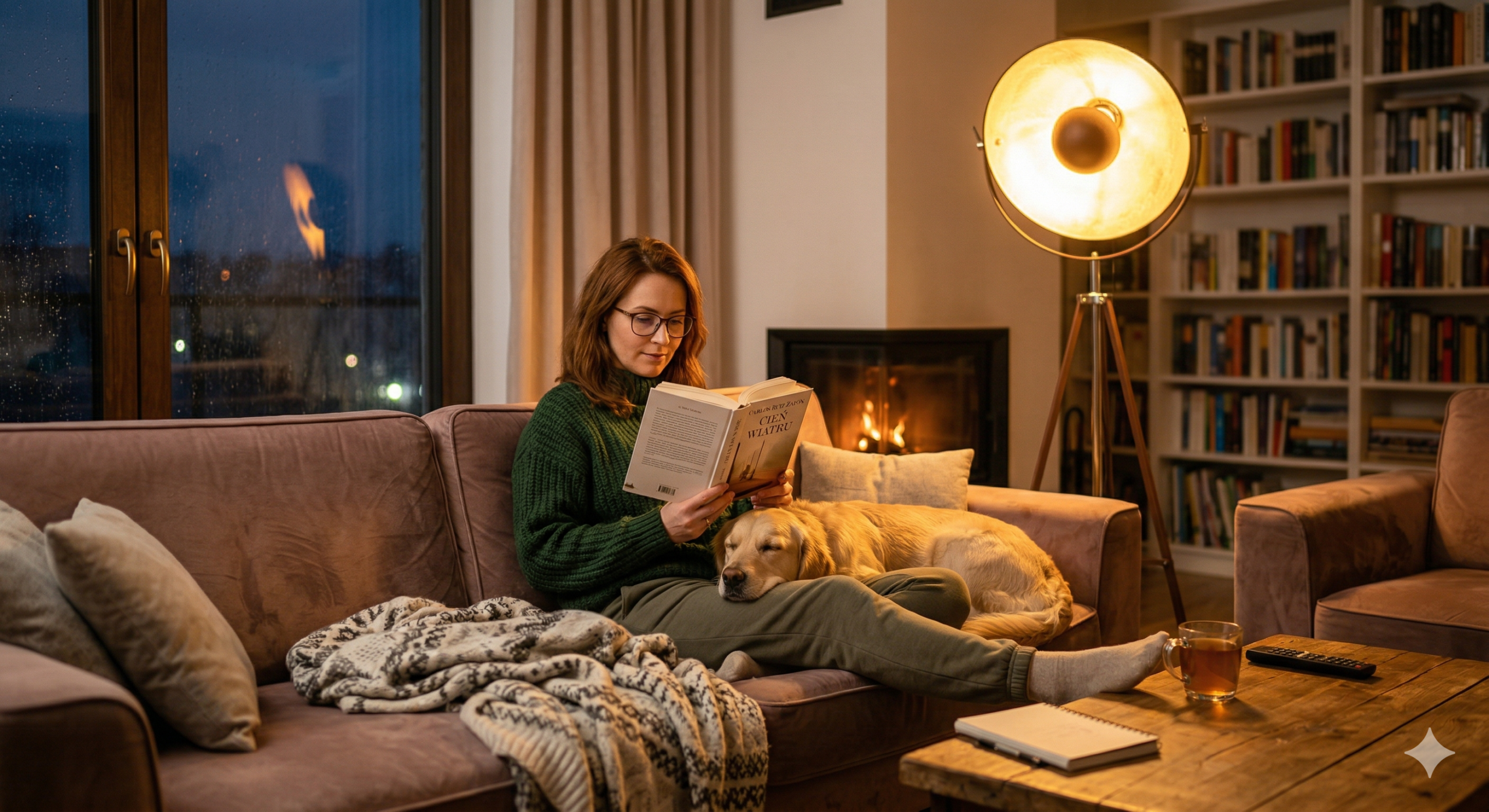
- read a book czytać książkę
- watch TV ogladać TV
- take a bath brać kapiel
- go to sleep / bed iść spać / do lozka
- do homework robić lekcje
2Grammar – Present Simple (Reminder)
EN – Present Simple (Routine and Habits)
We use Present Simple to talk about routines, habits, and things that are always true.
| Sentence Type | Construction | Example |
|---|---|---|
| Affirmative (+) | I/You/We/They + verb He/She/It + verb -s/-es | I cook dinner. She cooks dinner. |
| Negative (-) | I/You/We/They + don’t + verb He/She/It + doesn’t + verb | We don’t work. He doesn’t work. |
| Question (?) | Do + I/You/We/They + verb? Does + He/She/It + verb? | Do you read? Does it rain? |
Short answers: Do you like coffee? — Yes, I do. / No, I don’t.
Does she work? — Yes, she does. / No, she doesn’t.
Kiedy używamy Present Simple?
Present Simple uzywamy do opisywania rutyny i nawyków — rzeczy, które robimy regularnie. To jest główny czas do mówienia o codziennym dniu!
Zdania twierdzace (Affirmative)
W trzeciej osobie liczby pojedynczej (he, she, it) dodajemy do czasownika -s lub -es!
I wake up at 7 AM. (Wstaje o 7:00.)
She wakes up at 7 AM. (Ona wstaje o 7:00.) — dodajemy -s!
He watches TV in the evening. (On ogladac TV wieczorem.) — dodajemy -es!
Przeczenia i Pytania (Negative and Questions)
| Typ | Budowa | Przyklad |
|---|---|---|
| Przeczenie (I/you/we/they) | don’t + czasownik | I don’t watch TV. |
| Przeczenie (he/she/it) | doesn’t + czasownik | She doesn’t work. |
| Pytanie (I/you/we/they) | Do + podmiot + czasownik? | Do you like coffee? |
| Pytanie (he/she/it) | Does + podmiot + czasownik? | Does she play guitar? |
She works. — Does she work? (NIE: Does she works?)
Najczestsze slowa sygnalowe (Signal words)
every day / every morning / every weekend — co dzien / kazde rano
always / usually / often / sometimes / never — zawsze / zazwyczaj / czesto / czasami / nigdy
in the morning / in the evening — rano / wieczorem
on Mondays / on weekdays — w poniedzialki / w dni powszednie
3Grammar Tasks – Present Simple
Task 1 – Affirmative / Twierdzenia
Insert the verb in parentheses in the correct form. Remember -s/-es for he/she/it! / Wstaw czasownik w odpowiedniej formie.
Task 2 – Negative / Przeczenia
Change to negative using don’t or doesn’t. / Przeksztalc na przeczace, uzywajac don’t lub doesn’t.
Task 3 – Questions / Pytania
Make questions from the words. Use Do or Does. / Ulozy pytania ze slow. Uzyj Do lub Does.
Task 4 – Translate the Phrases / Przetlumacz fragmenty
Translate the passages in parentheses into English. / Przetlumacz fragmenty w nawiasach na angielski.
4Reading – Two Different Lives
Przeczytaj tekst o dwoch osobach, ktore maja zupelnie inna rutyne. / Read about two people with very different routines.
Sarah (The Early Bird)
Sarah is a yoga teacher. She loves mornings. She gets up very early, at 5:30 AM. First, she drinks a glass of water and makes the bed. She doesn’t have a big breakfast — she only eats an apple and drinks green tea. She commutes to work by bike. She teaches yoga from 7:00 AM to 1:00 PM. In the evening, Sarah relaxes. She reads a book and goes to bed at 9:30 PM.
David (The Night Owl)
David is a programmer. He works from home, so he doesn’t commute to work. He hates mornings. He wakes up at 10:00 AM, takes a long shower, and drinks three cups of black coffee. He starts work at 11:30 AM. He checks emails and writes code. David finishes work late, at 8:00 PM. After work, he makes dinner and plays video games. He goes to the gym at midnight! He finally goes to sleep at 2:00 AM.
Activity 1 – True or False? / Prawda czy Falsz?
1. Sarah gets up at half past five.
2. Sarah eats eggs and toast for breakfast.
3. David goes to work by bus.
4. David works in his house.
5. David is very active at midnight.
Activity 2 – Answer the Questions / Odpowiedz na pytania
Write your answers in English using full sentences. / Napisz odpowiedzi pelnym zdaniem.
Activity 3 – Who does it? / Kto to robi? (Sarah or David)
5Gap Fill – My Typical Saturday
Fill in the gaps with the correct verb form
Uzupelnij luki odpowiednimi czasownikami. Pamietaj o koncowce -s/-es dla 3. osoby. / Remember -s/-es for he/she/it!
On Saturdays, I (1) up late, usually around 9:00 AM.
I (2) a long breakfast with my family.
My husband, Tom, (3) the dog in the park because he loves the morning air.
We (4) on weekends, so we have a lot of free time.
In the afternoon, Tom (5) lunch for us — he is a great cook!
In the evening, we usually (6) a movie together.
Then we (7) to bed around 11:00 PM.
6Listening Activities
Listening Activity 1 – Morning Chaos (Anna)
Postuchaj, jak Anna opowiada o swoich porankach i wybierz poprawna odpowiedz (A, B lub C). / Listen and choose the correct answer.
Listening 1 – Questions
1. What time does Anna wake up?
2. What does she make for her children?
3. How does Anna go to the office?
Listening Activity 2 – Oliver’s Evening
Postuchaj, jak Oliver opisuje swoj wieczor. Uzupelnij brakujace informacje jednym lub dwoma slowami. / Listen and fill in the missing information.
Listening 2 – Fill in the Missing Information
Complete with one or two words. / Uzupelnij jednym lub dwoma slowami.
7Writing Task – My Typical Day
Useful Phrases to Describe Your Day / Przydatne zwroty
| Category / Kategoria | English / Po angielsku | Polish / Po polsku | Example / Przyklad |
|---|---|---|---|
| Sequence / Kolejnosc | First, Then, After that, Finally | Najpierw, Potem, Po tym, Na koniec | First, I wake up. Then, I make coffee. |
| Time of day / Pora dnia | In the morning, In the afternoon, In the evening, At night | Rano, Po poludniu, Wieczorem, W nocy | I read books in the evening. |
| Frequency / Czestotliwosc | Always, Usually, Often, Sometimes, Never | Zawsze, Zazwyczaj, Czesto, Czasami, Nigdy | I usually finish work at 5 PM. |
| Connectors / Laczniki | and, but, because, so | i/oraz, ale, poniewaz, wiec | I am tired, so I go to sleep. |
Write about your typical day / Napisz o swoim typowym dniu roboczym
Write 6-8 sentences. Include / Napisz 6-8 zdan:
- Minimum 5 different verbs from the lesson / min. 5 roznych czasownikow z lekcji
- Minimum 2 sequence words: First, Then, After that / min. 2 slowa kolejnosci
- Minimum 1 adverb of frequency: usually, always… / min. 1 przyslowek czestotliwosci
- Minimum 1 negative sentence / min. 1 zdanie przeczace
Start with / Zacznij od:
8Speaking Practice
Lesson Complete!
Send your results to your teacher / Wyslij wyniki do nauczyciela
+ To Be What · Where · Who · When · How · Why
+ To Be 4 nagrania · gap-fill · dictation